But the draft class isn’t the story. What happens next is.
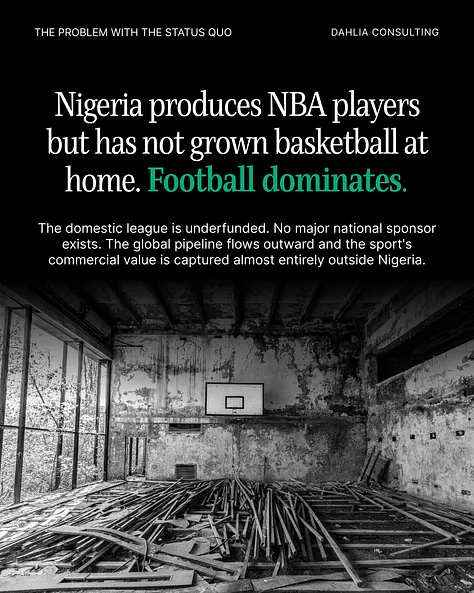
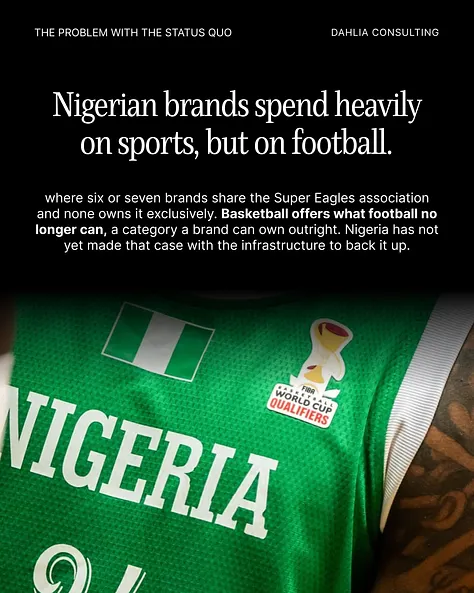
Basketball in Nigeria has never grown at the same rate as it has produced NBA talent. No national sponsor. Underfunded league. Infrastructure that doesn’t match the pipeline.
That changes now, or it doesn’t change at all.
Six names, one pattern
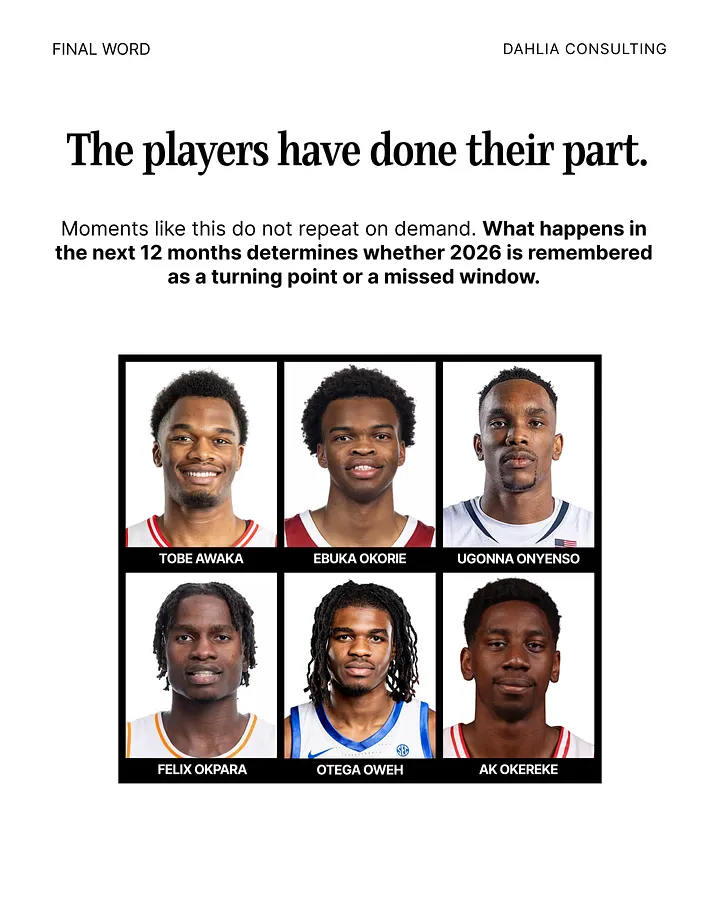
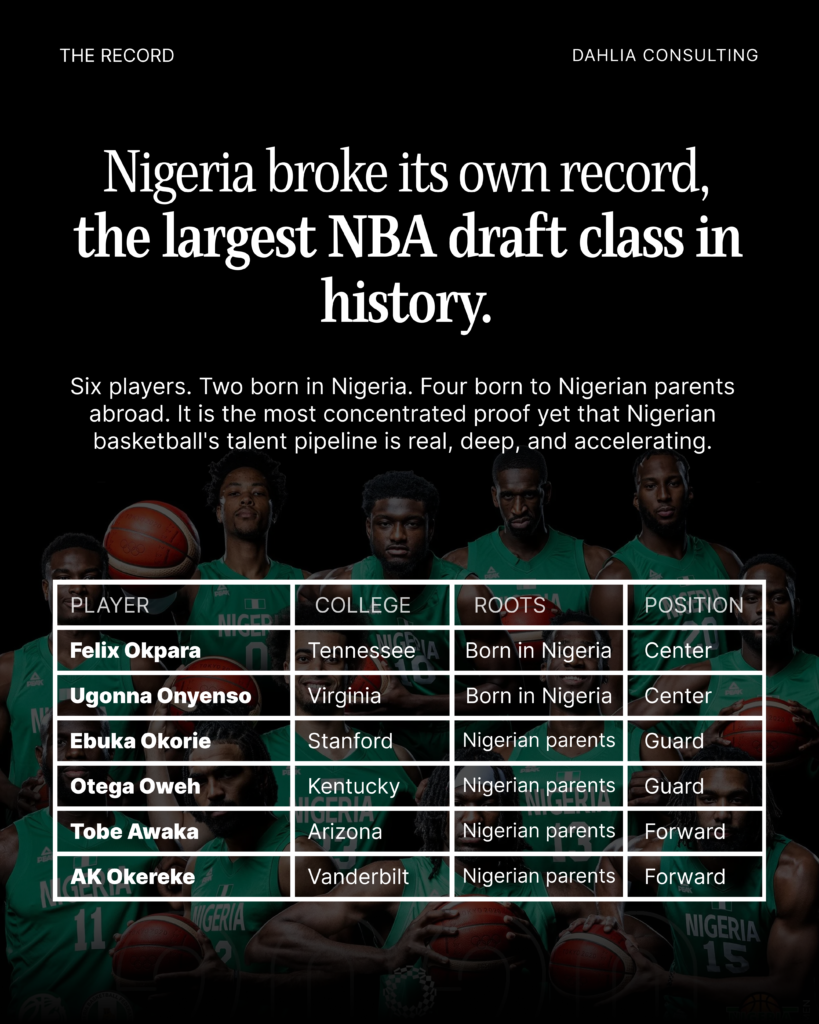
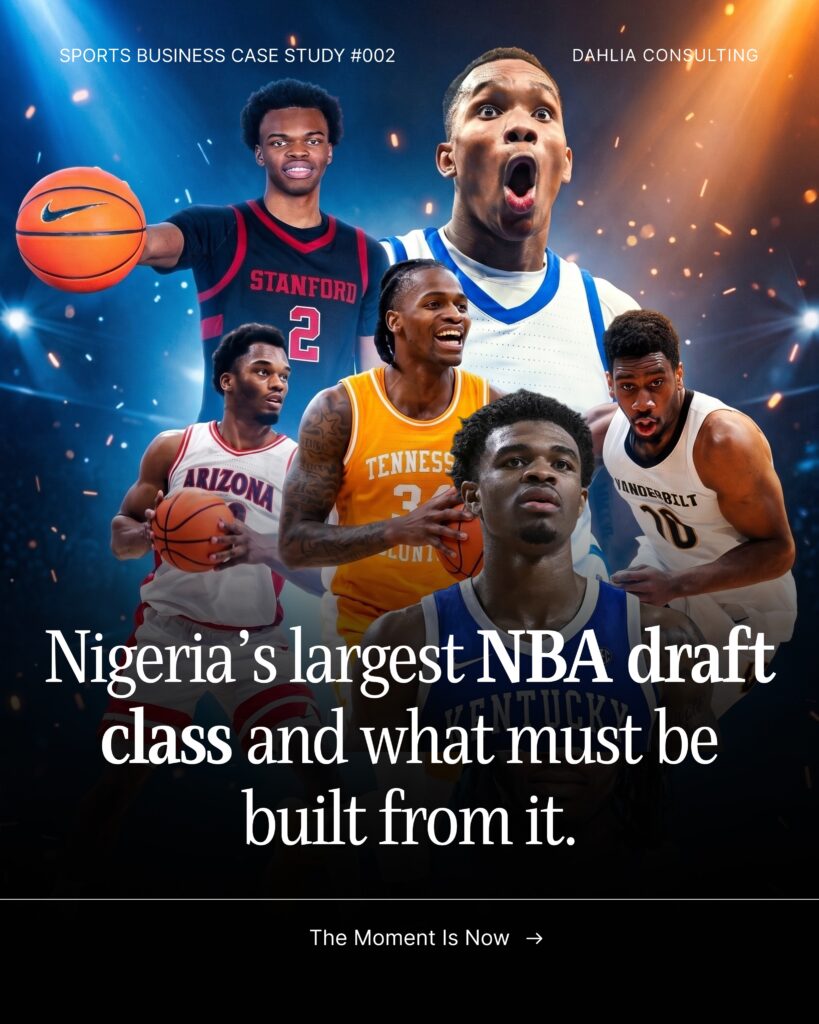
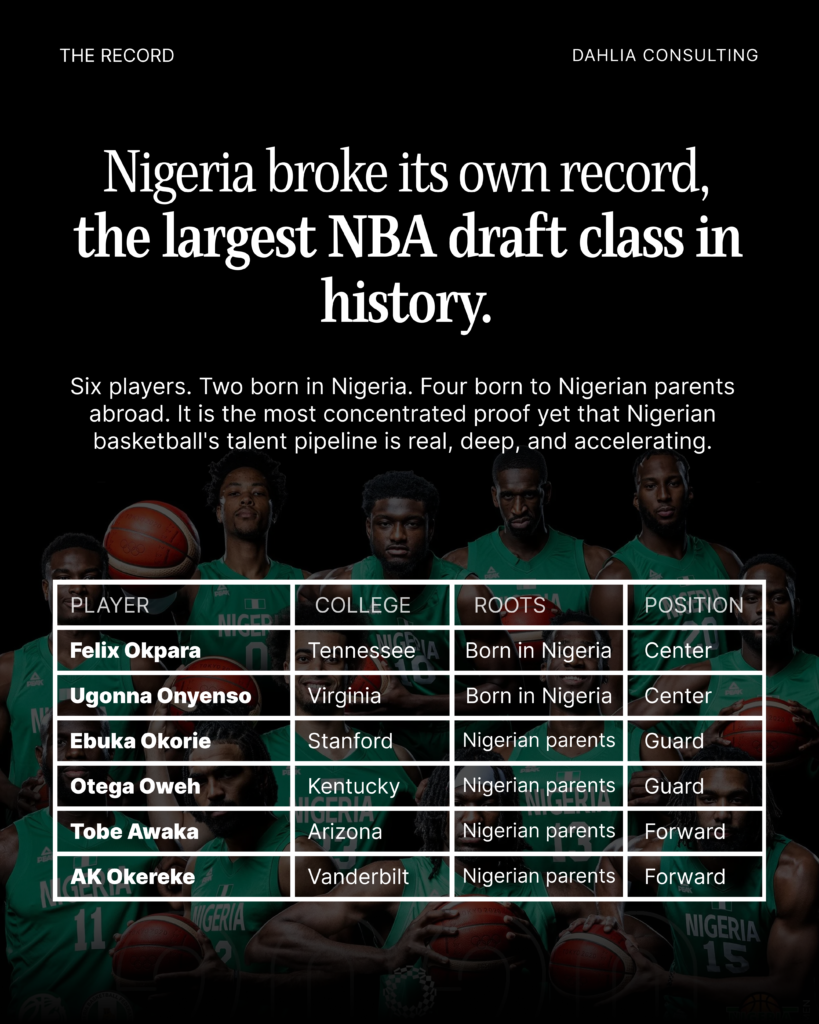
Ebuka Okorie. Zuby Ejiofor. Otega Oweh. Felix Okpara. Tobi Lawal. Ugonna Onyenso. Six players of Nigerian heritage were drafted across two rounds at the Barclays Center, the second-deepest class in Nigerian NBA history, trailing only the nine selected back in 2020.
Look closer at the paths, and the pattern is impossible to miss. Okorie grew up in Nashua, New Hampshire. Ejiofor was born in Dallas. Oweh’s family emigrated from Nigeria before he ever picked up a basketball in the country. Lawal was raised in London and didn’t start playing until 16. Onyenso is one of the few who actually grew up in Nigeria, born in Owerri. He played football first, switched to basketball, trained at NBA Academy Africa in Senegal, and became the youngest player ever capped for the senior men’s national team at just 17.
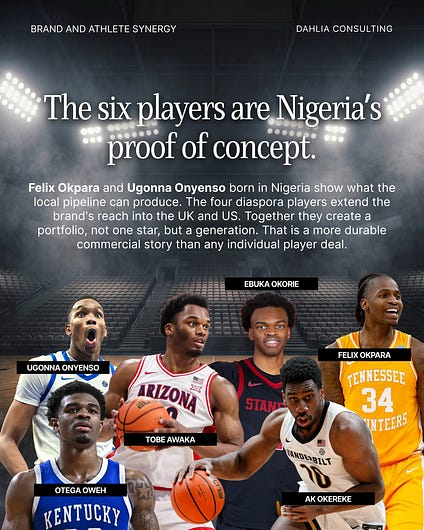
Two born-in-Nigeria players. Four were built entirely in the diaspora. That ratio is the story. Nigeria isn’t producing this talent through its own basketball system; it’s inheriting it from immigrant families and academies built somewhere else. The pipeline works. The local infrastructure it should be feeding does not.
And the six drafted don’t even tell the whole story. Tobe Awaka, son of Nigerian immigrants, national Sixth Man of the Year after helping Arizona reach the Final Four went undrafted but signed a two-way deal with the Chicago Bulls. AK Okereke, born Akachi Onyedika Okereke, went undrafted out of Vanderbilt and signed his own two-way deal with the Los Angeles Lakers. That’s eight players with Nigerian roots now sitting on NBA rosters or affiliate contracts from a single cycle. The depth doesn’t stop at the six names that got called out on draft night.
The gap nobody wants to name
Here’s the uncomfortable part: none of that talent pipeline runs through a domestic league anyone can point to with confidence. No marquee national sponsor backing the sport. A league that struggles for consistent funding, consistent broadcast, consistent anything. Facilities that lag far behind what a country producing this much NBA-level talent should have.
Compare that to what the NBA itself has built on the continent, training centers, academies, and a Basketball Africa League with real commercial backing. The global infrastructure exists. Nigeria’s own domestic infrastructure hasn’t caught up to match the talent it keeps sending to the league.
Every draft night like this one produces the same headlines and the same pride. But pride doesn’t build gyms. It doesn’t pay coaches. It doesn’t fund a league that keeps talent developing at home instead of exporting it fully formed from American high schools and European academies.
What the comparison actually teaches
What Yao Ming did for basketball in China. What Giannis Antetokounmpo did for Greece. Those aren’t just individual success stories; they’re case studies in what happens when a federation, a broadcaster, and a sponsor base decide to build around a moment instead of just celebrating it.
Yao didn’t just get China watching the NBA. His success became the foundation for domestic investment, youth programs, and a generation of kids with a reason to pick up a basketball instead of a football. Giannis did something similar for Greece, a country with real basketball history, that used his rise to reinvest in its own domestic game rather than just exporting the next one.
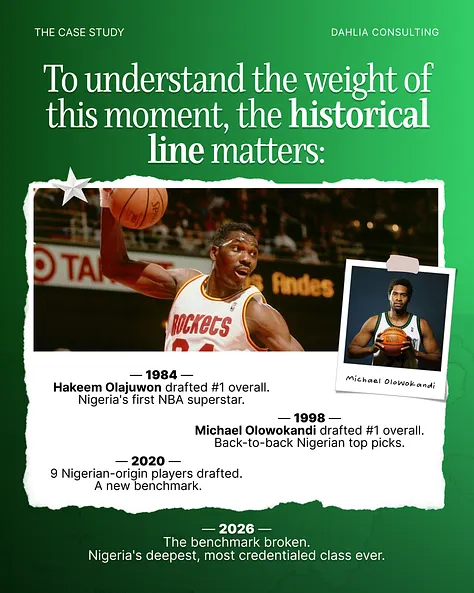
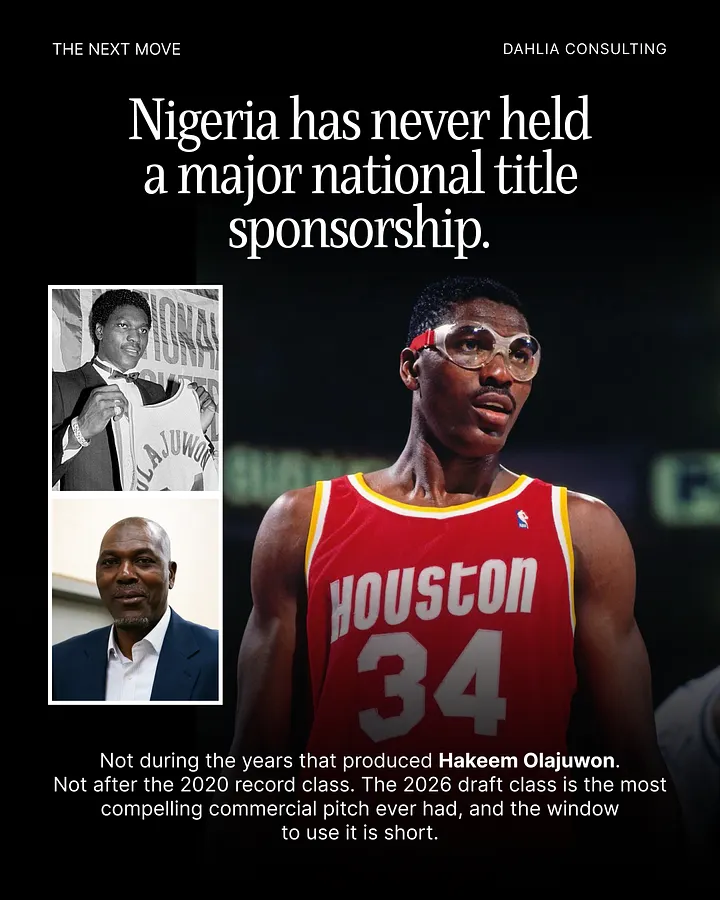
Nigeria has the talent to write that same story. Hakeem Olajuwon proved it four decades ago. This class proves the pipeline hasn’t slowed down since. What’s never been proven is whether the institutions around that talent can move at the same speed the talent does.
The window doesn’t wait for anyone
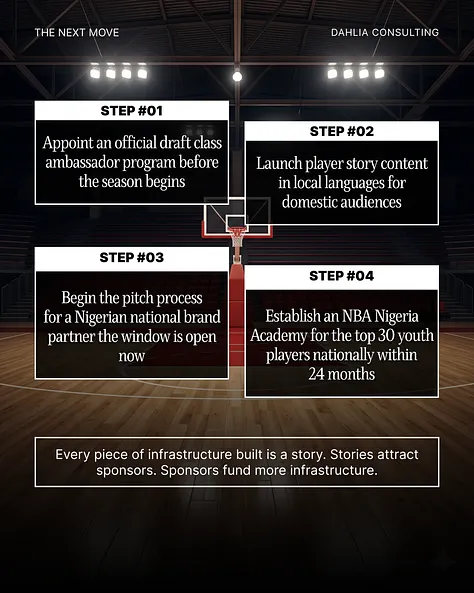
The difference is always whether the federation moves during the window, not after it. Sponsors don’t back potential; they back momentum. And momentum has a shelf life. Right now, six Nigerian names are on NBA rosters and the story is fresh enough to build a campaign around, fresh enough for a sponsor to attach itself to a movement instead of just a moment.
In two years, this draft class will be old news, absorbed into rosters, replaced by whatever draft class comes next. The chance to build something domestic off the back of this attention will have passed with it.
The window is open.